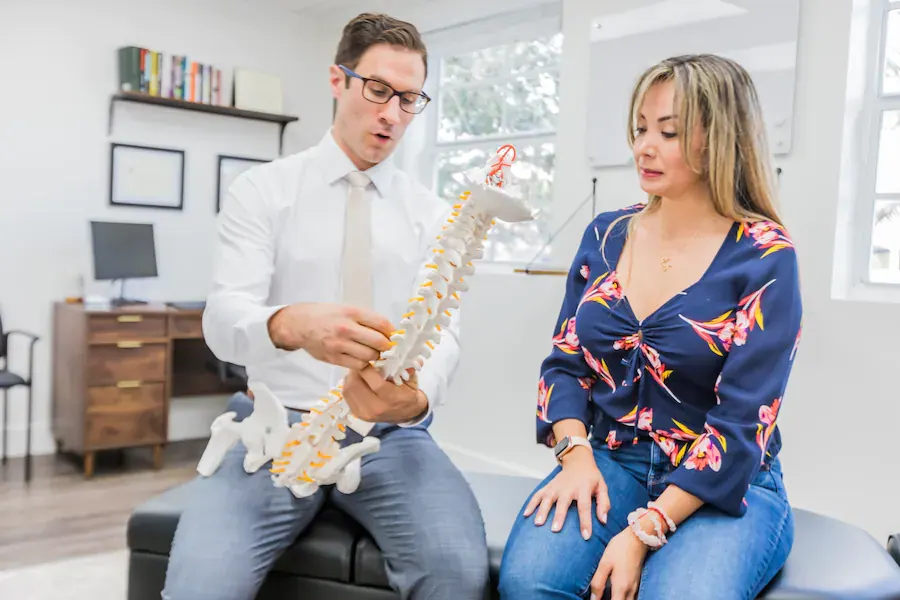
In this episode of the Freedom Family Chiropractic podcast, Dr. David Ridos dives into one of the most common yet overlooked health challenges people face: the gradual loss of mobility. He explains how small, everyday limitations — like shoulder tightness or stiffness when bending — can sneak up on you over time before becoming serious problems.
Dr. Ridos breaks down the root causes of reduced mobility and why simply resting or pushing through the pain often isn’t enough. He shares how chiropractic care addresses the underlying structural and neurological issues that restrict movement, helping patients restore function and flexibility.
Whether you’re an active adult noticing early signs of stiffness or someone who has been struggling with limited range of motion for years, this episode offers practical insight into how chiropractic treatment at Freedom Family Chiropractic can help you get back to moving and living well.
Transcript
Hey there, and welcome back to the Freedom Family Chiropractic podcast. I’m Doctor David Ridos, and today we’re talking about something that affects just about everyone at some point in their life — mobility. Or more specifically, what happens when you start to lose it, and what you can do about it.
Now, here’s the thing. Most people don’t notice their mobility slipping away all at once. It’s gradual. One day you reach for something on a high shelf and you feel that tightness in your shoulder. Or you get up off the couch and your hips feel stiff for the first few steps. Sound familiar? You might brush it off. Tell yourself it’s just part of getting older. But here’s what I want you to understand — reduced mobility is not something you just have to accept.
So let’s break this down. What do we actually mean when we talk about mobility? Mobility is your body’s ability to move freely, fully, and without pain. It involves your joints, your muscles, and your nervous system all working together. When one of those pieces isn’t doing its job well, the whole system starts to compensate. And that’s when you start feeling stiff, achy, or limited in how you move.
Here’s where chiropractic care comes in. One of the most common causes of reduced mobility is joint restriction. That’s when a joint in your spine or your extremities — your hips, shoulders, knees — isn’t moving through its full range of motion. These restricted joints put extra stress on the surrounding muscles and tissues, and over time, your body braces around them. It tightens up. It guards. And before you know it, simple movements feel harder than they should.
What chiropractic adjustments do is help restore proper movement to those restricted joints. When we work with a joint that’s been stuck or moving poorly, we’re helping it move the way it was designed to move. And when that happens, the muscles around it can relax, the nervous system gets better feedback, and people often notice they’re moving more freely — sometimes pretty quickly after care begins.
Now, here’s what’s interesting. Mobility isn’t just about your joints in isolation. Your spine plays a huge role in how your entire body moves. Think about it — your spine is the central highway for your nervous system. When segments of your spine are restricted or misaligned, it can affect muscle coordination, balance, and even how your arms and legs function. So when we improve spinal mobility, we’re often helping the whole body move better — not just the back.
Alright, let’s talk about some practical things you can start doing today. Number one — move more, but move intentionally. Gentle, consistent movement is one of the best things you can do for your joints. Short walks, easy stretching, or some light movement in the morning can make a real difference over time. Number two — pay attention to how you sit. Prolonged sitting is one of the biggest enemies of good mobility. If you work at a desk, try to get up and move for a few minutes every hour. Number three — don’t ignore the early warning signs. Stiffness and tightness are your body’s way of telling you something needs attention. Catching it early is always better than waiting until it becomes pain.
Now, if you’ve been noticing that you’re not moving as well as you used to — whether it’s in your back, your neck, your hips, or anywhere else — that’s a great reason to come in and get evaluated. A thorough assessment can help us figure out exactly where you’re restricted and what’s driving it. From there, we can put together a care plan that’s specific to you and your goals.
At Freedom Family Chiropractic, right here in Weston, we work with people of all ages and activity levels. Whether you’re a weekend warrior, a busy parent, or someone who just wants to stay active and feel good as you get older — we’re here to help you move better and feel better.
Thanks so much for tuning in today. If you found this helpful, please share it with someone who could use it. And if you’re ready to take that first step, give us a call or visit our website to schedule a time to come in. We’d love to meet you. I’m Doctor David Ridos, and we’ll see you next time.